
A slow-draining sink or an overflowing toilet is often just a symptom of a much larger underlying problem within your property’s plumbing system. While store-bought chemical cleaners or a basic plunger might offer a brief temporary fix, recurring blockages typically signal a deeper issue within the pipework. Achieving long-term performance requires a methodical approach to identifying and rectifying the true source of the obstruction. Licensed plumbers rely on a systematic procedure to move beyond quick fixes and restore optimal wastewater flow.
Step 1: Initial Assessment & Diagnostic CCTV Inspection
Before applying any physical intervention, a qualified plumber conducts a thorough preliminary assessment. This involves checking fixture drainage rates, asking about recent household activity and checking for signs of sewer backup around outdoor overflow gully traps.
The primary tool for diagnosing root issues is the high-definition CCTV drain camera. Plumbers feed a flexible, fibre-optic camera line directly through an existing inspection opening or fixture connection point.
- Live footage: Provides high-resolution, real-time visual feedback of the interior pipe walls on a monitor.
- Precise mapping: Integrated transmitters map the exact depth and location of structural defects from above ground.
- Defect pinpointing: Identifies hairline cracks, joint displacement, tree root intrusion, bellied pipes or heavy mineral scale accumulation.
Step 2: High-Pressure Water Jetting & Blockage Clearance
Once the technician determines the exact location and nature of the obstruction, specialised drain cleaning equipment is deployed to clear the pathway and reveal hidden wall defects. High-pressure water jetting is the industry-standard method for removing stubborn debris without compromising structural integrity.
Water jetters propel streams of water through specialised nozzles at pressures up to 5,000 PSI. This process cuts through fibrous tree roots, emulsifies congealed fats, oils and grease (FOG), and strips away biological sludge buildup along the interior walls. Thorough drain cleaning ensures the camera operator gets an unobstructed view during secondary inspections.
Step 3: Secondary Inspection & Structural Analysis
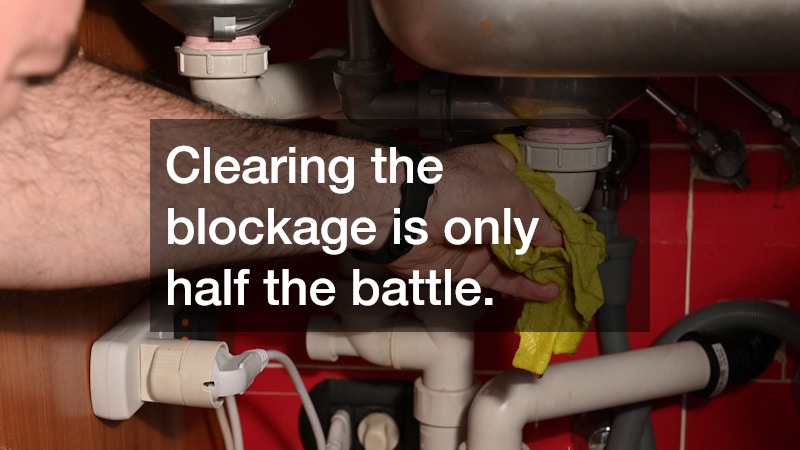
Clearing the blockage is only half the battle. Once wastewater is flowing freely again, the technician performs a secondary CCTV inspection to inspect the condition of the pipe wall beneath the obstruction. Common issues uncovered during this analysis include:
- Tree root intrusion: Microscopic root fibres enter fine joints and expand, catching toilet paper and solids. Over time, this causes severe structural cracking, joint separation and eventually complete pipeline collapse.
- Pipelaying sag (belly): Poor ground compaction or soil shifting creates a dip where standing water pools. Debris continuously settles in this section, causing recurring blockages that require ongoing maintenance.
- Corroded cast iron or broken earthenware: Older pipe materials degrade over time, creating rough interior surfaces that trap solids. Left unaddressed, wastewater can exfiltrate into surrounding soil, causing sinkholes or foundation damage.
- Pipe joint displacement: Ground movement or soil subsidence pulls pipe connection points apart. This leaves gaps that invite immediate soil ingress and persistent root entry points.
Step 4: Targeted Repair & Long-Term Rehabilitation
Once the primary underlying cause is confirmed, the technician formulates a targeted rehabilitation strategy to prevent the issue from returning. Modern plumbing technologies allow plumbers to repair underground pipes with minimal disruption to lawns, driveways or landscaping.
- An epoxy resin-impregnated felt liner is inserted into the damaged pipeline. Once inflated and cured in place, it forms a seamless, joint-free pipe inside the original conduit, permanently sealing off root ingress points.
- If the pipe has suffered a total structural failure or lost its downward gradient, trenchless options are non-viable. The plumber excavates the specific section identified by the camera locator, removes damaged material and reinstates heavy-duty PVC pipework.
- For lines prone to organic buildup or slow root regrowth near old earthenware connections, setting up routine preventative inspections ensures high-flow performance year-round.
Addressing persistent plumbing issues requires accurate diagnostic evaluation rather than repetitive quick fixes. By combining high-definition camera technology with targeted drain cleaning techniques, licensed plumbers ensure your property’s drainage infrastructure remains reliable, efficient and free of long-term structural faults.
About the Author